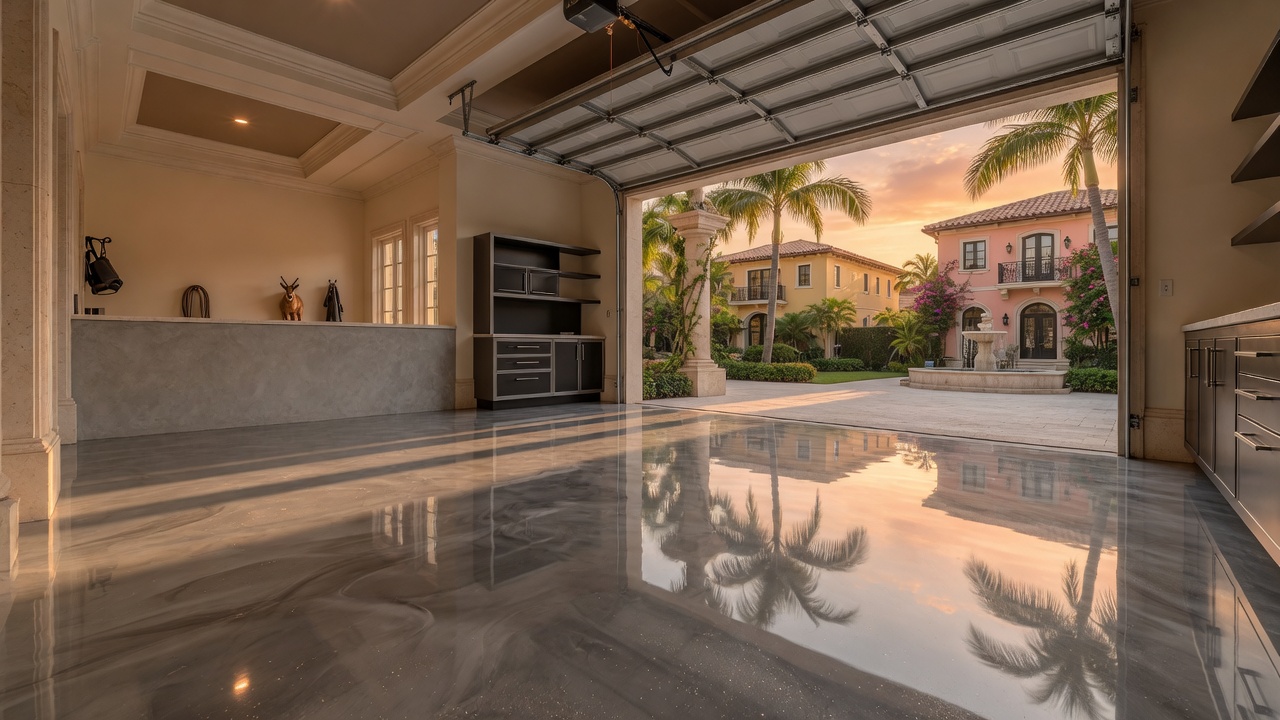
Garage floor epoxy in Coral Gables
that stands up to daily parking and Florida heat.
Garage floor epoxy in Coral Gables has to handle hot tires, open-door UV, and humid slabs—not just look good for a weekend. We diamond-grind, repair, and install solid, flake, or metallic systems with topcoats built for South Florida homes from estate garages to everyday two-car bays.
- Prep-first
- Install approach
- Hot-tire
- Resistant systems
- Local
- Coral Gables area
- Warranty
- On workmanship
Why garage floor epoxy matters in Coral Gables
Garage floor epoxy is a resinous coating over prepared concrete that creates a seamless, easy-clean surface. Elite Epoxy Flooring Coral Gables installs professional systems across Coral Gables and South Florida, where open garage doors, strong sun, and hot tires punish thin DIY kits. A professional epoxy garage floor uses higher-solids materials bonded to a mechanically ground slab so the coating resists oil, chemicals, and daily parking. Popular garage floor coating options include decorative flake (hides dirt and adds grip), metallic epoxy (high-gloss movement), and solid color (clean and budget-friendly). Humidity-aware prep and a UV-stable topcoat matter as much as the color you choose.
Why homeowners choose a pro garage floor coating
1–2 days
Install window
~12–24 hr
Foot traffic
24–72 hr
Vehicle return
Long-term
Service life
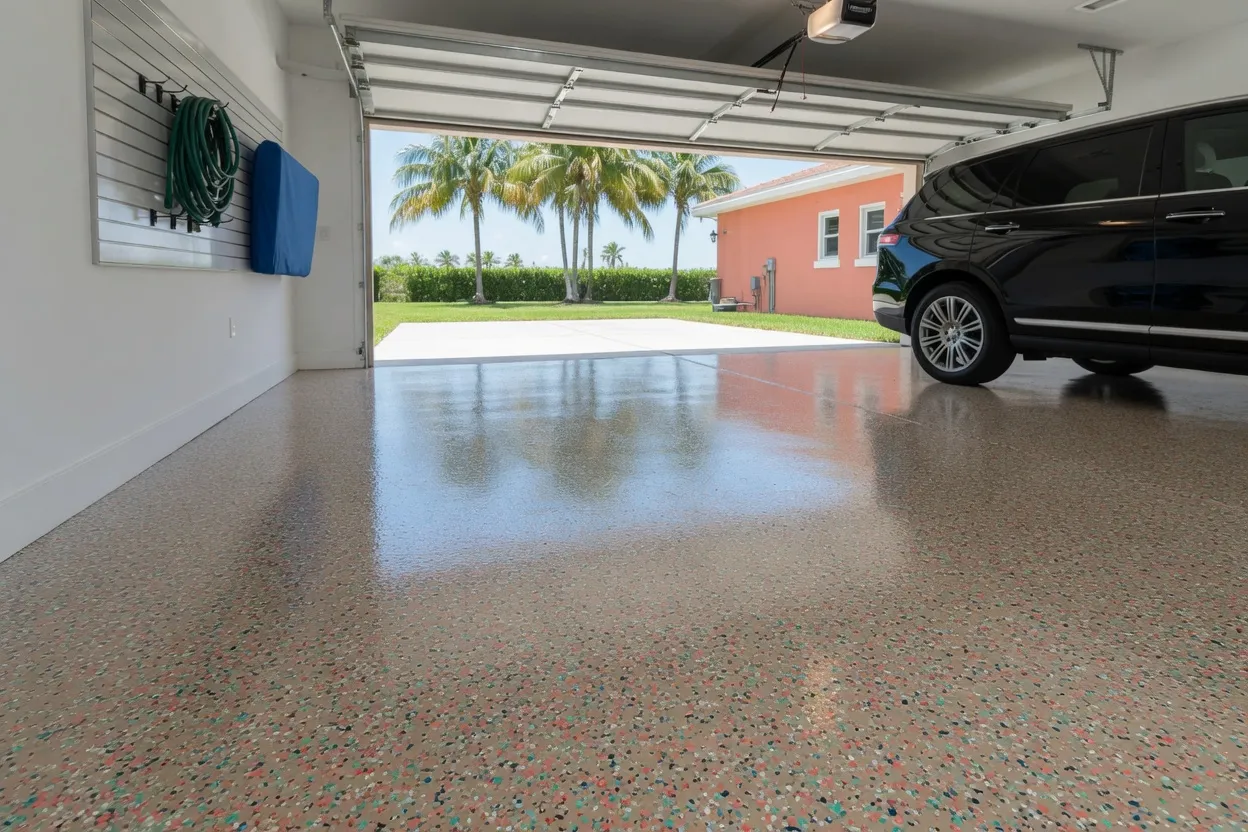
Stop living with stained, dusty Coral Gables garage concrete
A professional garage floor epoxy coating turns cracked, oil-stained slabs into a clean surface you can actually maintain. We grind for adhesion, repair damage, then install a system sized for hot tires and Florida heat—not a thin DIY film that peels after a few seasons of sun and humidity.
Whether you want full flake for a busy family garage near Coconut Grove or a dark solid color for a minimalist look, durability starts with prep and the right topcoat chemistry.
Garage floor coating options
Three proven looks for residential garages — all installed with prep-first standards.
Solid color epoxy
Clean, uniform finish. The most straightforward garage floor epoxy look at an approachable price point.
Decorative flake
Multi-color chips hide imperfections, add texture, and deliver the classic garage floor epoxy look.
Metallic epoxy
High-gloss metallic movement for a premium, showroom-style garage floor.
Polyaspartic topcoats
UV-stable, abrasion-resistant topcoats often paired with epoxy base systems for Florida garages.
Mechanical surface prep
Diamond grinding and repair so the coating bonds — the step DIY kits usually skip.
Clear return-to-service plan
Know when you can walk, store, and park after your garage floor coating is complete.
How we install garage floor epoxy in Coral Gables
A clear four-step process from bare concrete to a sealed, ready-to-use garage floor coating.
-
Step 1: Surface prep
Diamond grind the slab, remove failing coatings, and repair cracks so the system can bond.
-
Step 2: Prime and base
Apply primer and epoxy base coats matched to your solid, flake, or metallic system.
-
Step 3: Broadcast or color
Install flake, metallic effects, or solid color according to the finish you chose.
-
Step 4: Seal and cure
Apply a protective topcoat and review cure times for foot traffic and vehicles.
Garage floor epoxy pricing guide
Ballpark ranges for Coral Gables and South Florida residential garages. Final pricing depends on slab condition, prep needs, and system choice.
| Garage size | Solid color | Decorative flake | Metallic |
|---|---|---|---|
| 1-car (~200–250 sq ft) | From ~$1,000+ | From ~$1,400+ | From ~$1,800+ |
| 2-car (~400–500 sq ft) | From ~$2,000+ | From ~$2,800+ | From ~$3,600+ |
| 3-car (~600–750 sq ft) | From ~$3,000+ | From ~$4,200+ | From ~$5,400+ |
- Ranges are planning estimates only and include typical prep, materials, and labor assumptions. Moisture issues, heavy repairs, or specialty topcoats can change the quote.
- Request a free on-site estimate for an exact garage floor epoxy price for your home.
Epoxy vs polyaspartic for garage floors
Many modern garage floor coatings use epoxy for build and polyaspartic for a tougher, faster-curing topcoat. We recommend the stack that fits your use and timeline.
| Feature | Epoxy base | Polyaspartic topcoat |
|---|---|---|
| Role in the system | Build, color, and body | UV/abrasion-resistant seal |
| UV stability | Can amber if left as sole finish | Typically UV stable |
| Hot tire performance | Depends on full system | Strong when specified correctly |
| Best for | Color and thickness | Florida sun and daily drivers |
DIY kits vs professional garage floor epoxy
Hardware-store kits often fail because the slab is not prepped and the film is too thin for Florida heat and hot tires.
Included
- Diamond grinding for mechanical bond
- Crack and spall repair when needed
- Professional-grade epoxy / hybrid systems
- Hot-tire-minded topcoat options
- Workmanship warranty guidance
- Clear cure and care instructions
Not included
- Acid-etch-only prep (common DIY failure)
- Thin water-based films that peel early
- No moisture or coating assessment
- Guesswork on drive-on times
Garage floor epoxy FAQ
Is it worth it to epoxy your garage floor?
For most Coral Gables and South Florida homes, yes—if you want easier cleaning, better stain resistance, and a finished look that holds up to daily parking. It pays off when the slab is prepped correctly and the system includes a durable topcoat for heat and UV. Thin big-box kits often fail early; a pro system is built for real garage use.
How much does it cost to epoxy a garage floor?
Cost depends on square footage, repairs, decorative system (solid, flake, or metallic), and whether we add a polyaspartic topcoat. Professionally installed residential garages commonly range from a few thousand dollars upward, with higher-end flake and metallic systems costing more per square foot. Request a free on-site estimate for an accurate Coral Gables quote.
Can I epoxy a garage floor myself?
DIY kits can look fine short term, but many peel near doors or tire paths within a few years because prep, moisture, and film thickness are hard to get right. Professional installs include diamond grinding, repairs, and system chemistry rated for hot tires and Florida sun. If longevity matters, hire a crew that treats prep as the main job.
What is the downside of epoxy garage floors?
Risks include peeling from moisture or weak prep, hot-tire pickup on low-grade systems, UV yellowing without a stable topcoat, and visibility of dirt on solid light colors. None of those are automatic—correct product choice and installation reduce them. We specify garage systems for vehicle traffic, humidity, and sun exposure.
Will hot tires damage epoxy garage floors?
They can on thin or poorly bonded coatings. We specify garage systems and topcoats intended for vehicle traffic and Florida heat, with proper mechanical prep so the film resists hot-tire pickup. Hybrid epoxy-plus-polyaspartic builds are a common upgrade for high-sun garages.
How long until I can park on garage floor epoxy?
Many systems allow light foot traffic within about 12–24 hours and vehicle traffic in roughly 24–72 hours, depending on product, temperature, and humidity. Faster polyaspartic topcoats can shorten return-to-service. We confirm exact times for your install before we leave the site.
Is flake or solid color better for a garage?
Flake hides dirt, oil spots, and minor imperfections and adds light texture; solid color looks clean and uniform and is often more budget-friendly; metallic is the premium decorative look. Choose based on how the garage is used and how much maintenance you want. We help match the system during your estimate.
How do I maintain a coated garage floor?
Sweep grit, mop with a mild cleaner, and wipe spills promptly. Avoid harsh solvents unless the system is rated for them. No waxing is typically required. With basic care, a professionally installed garage floor coating can stay sharp for many years.
Explore related floor coatings
Basement Epoxy Flooring
Basement epoxy flooring in Coral Gables with moisture-aware assessment first. Cleaner, sealed lower-level floors for storage, gyms, and living areas. Free estimates.
Commercial Epoxy Flooring
Commercial epoxy flooring in Coral Gables for warehouses, retail, and showrooms. Traffic-ready systems and installs planned around your hours. Free estimates.
Concrete Floor Coatings
Concrete floor coatings in Coral Gables for garages, basements, commercial, and decorative systems. Prep-first installs and free local estimates.
Epoxy Flake Flooring
Epoxy flake flooring in Coral Gables for busy garages—full-broadcast chips that hide dust and stains with pro prep and durable topcoats. Free estimates.
Metallic Epoxy Flooring
Metallic epoxy flooring in Coral Gables with custom 3D color movement for garages, showrooms, and interiors. Prep-first installs and free local estimates.
Polyaspartic Coatings
Polyaspartic garage floors in Coral Gables for faster return to parking and UV-stable protection. Epoxy-polyaspartic hybrids built for Florida sun. Free estimates.
Solid Color Epoxy
Solid color epoxy in Coral Gables for modern garages and light commercial spaces. Clean uniform color with pro prep and durable topcoats. Free estimates.
Get a free garage floor epoxy estimate in Coral Gables
Tell us your garage size and preferred look—solid color, flake, or metallic—and we will outline options for Coral Gables and nearby South Florida homes.